A small living room has to do a lot: unwinding after work, hosting friends, film nights and often a bit of laptop time on the sofa as well. The good news is that a compact room can feel calm and generous with the right choices. The secret is to make every piece earn its place and to guide the eye so the space reads larger than its floor plan.
Start with how you really use the room
Before buying anything, spend a week watching what happens in the room. Where do you sit most? Where do bags, mail and chargers pile up? Do you host guests every weekend or once a month? Those answers shape the layout far better than any catalogue photo, and a room that matches daily habits stays tidy with very little effort.
Choose furniture that fits the scale
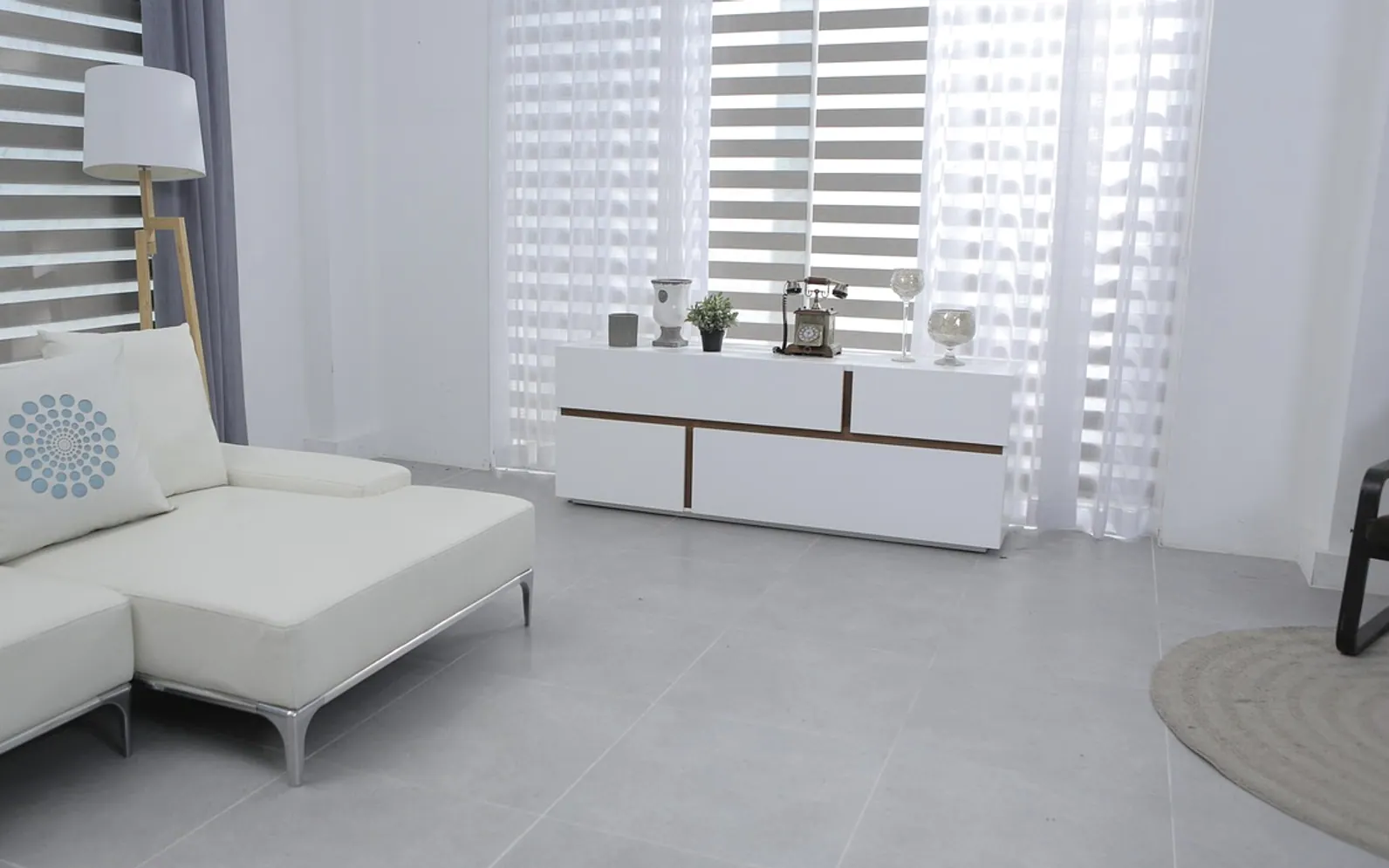
- Raised legs. Sofas, chairs and cabinets on slim legs show more floor, and visible floor makes a room feel wider.
- Fewer, better pieces. One well-proportioned sofa beats a sofa plus two bulky armchairs. Add a light occasional chair or a pouf that moves when needed.
- Double duty. A storage ottoman, a set of nesting tables or a coffee table with a shelf underneath gives clutter a home without adding furniture.
- Tape it out. Mark each new piece on the floor with masking tape before ordering. You will see straight away whether doors and walkways still open freely.
Arrange for easy flow
Resist pushing everything against the walls. Pulling the sofa forward even a hand's width can make the room feel considered rather than crammed. Keep a clear path from the door to the window, and group seating so people can talk without calling across the room. If a desk has to fit in, set it against a wall facing away from the sofa so work and rest feel like separate zones.
Use color to soften the edges
Light, warm tones reflect daylight and blur the corners. Painting walls, baseboards and even the ceiling in closely related shades removes the hard lines that make a room look boxed in. That does not mean everything has to be white: a deep, enveloping color carried across every surface can make a small room feel cozy and deliberate. What usually shrinks a space is a busy mix of strong colors all competing for attention.
Light it in layers
A single ceiling fitting rarely flatters a compact space. Combine three kinds of light instead:
- General light from a ceiling fitting or a modest chandelier.
- Task light from a reading lamp beside the sofa or a lamp on the desk.
- Accent light from a picture light, a small table lamp or a lit shelf.
A statement fitting can add character without stealing space. Our look at the rise of modern chandeliers shows how slim, open designs suit tighter rooms, and our guide on choosing the right chandelier size helps you avoid one that overwhelms a low ceiling.
Mirrors, curtains and rugs
A large mirror beside or opposite a window bounces light deeper into the room. Hang curtains close to the ceiling and let them extend past the window frame on both sides, which makes windows look taller and wider. Choose a rug big enough for at least the front legs of the sofa and chairs to rest on; it pulls the seating into one group, while a small rug floating in the middle does the opposite.
Storage that disappears
| Everyday problem | Small-room answer |
|---|---|
| Books and games | Tall, shallow shelving that uses height instead of floor |
| Cables and chargers | A lidded box or a drawer close to the socket |
| Throws and spare cushions | A basket or the inside of a storage ottoman |
| Keys, mail and bags | A narrow console or a row of hooks by the door |
Finish with a few personal touches
Once the basics work, add personality sparingly: one large artwork rather than a cluster of tiny frames, a couple of plants at different heights, and cushions in colors that repeat somewhere else in the room. Edit once a season. If something no longer earns its spot, let it go, and the room will keep feeling bigger than it really is.
Tell us what you think.
We read every message.